Torre (1,993 m)
Mainland Portugal's highest point and where snow lasts longest. It's also the busiest: on fresh-snow weekends the car park fills and the access road queues. Go early and you're on a different mountain.
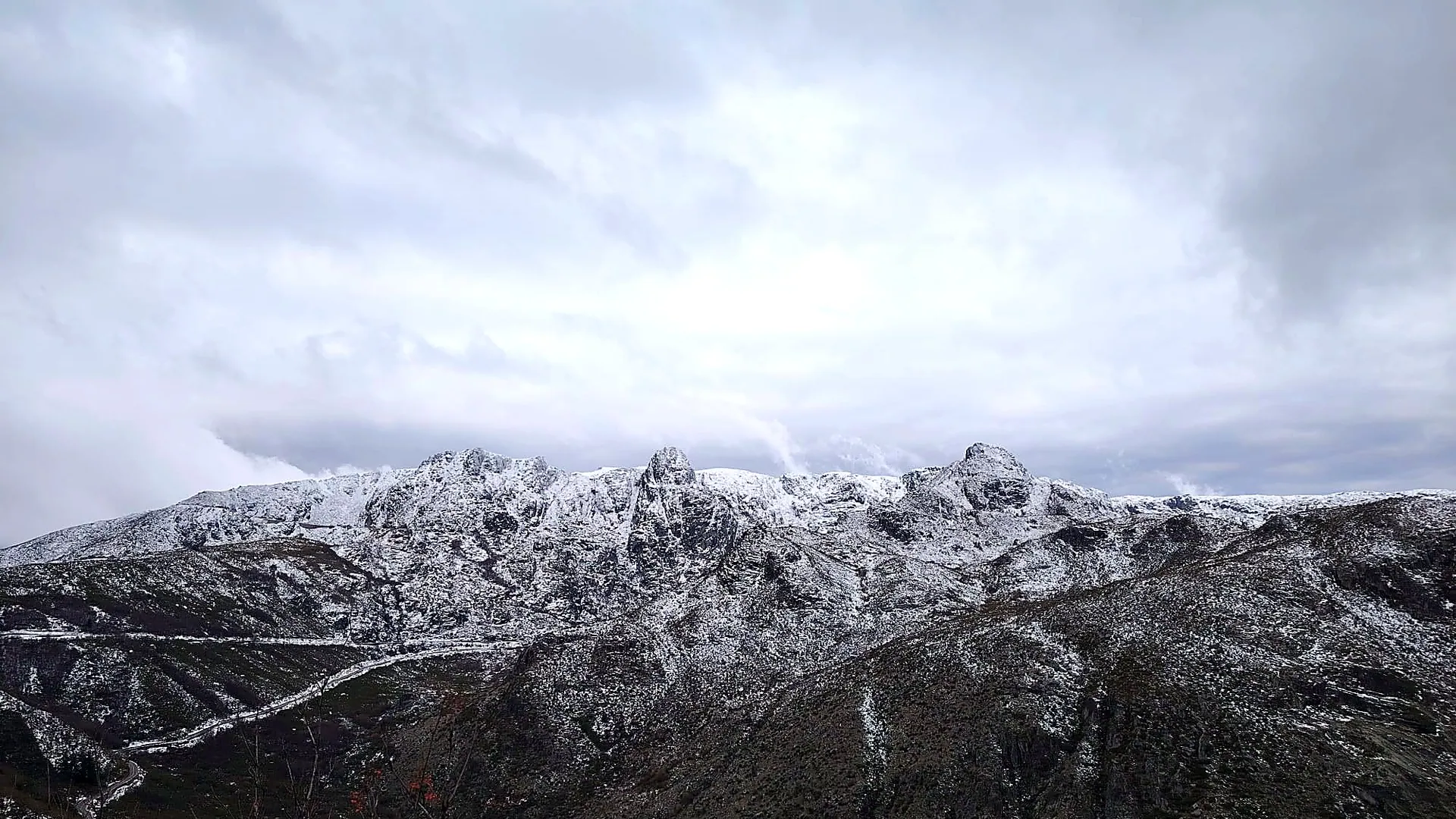
We work this mountain all winter. Here's what we know about when the snow falls, where it lasts, what closes, and what to bring.
The snow season in Serra da Estrela runs, in practice, from December to March. January and February are the months most likely to offer consistent cover above 1,400 metres, and also when snow that has already fallen holds best. November and April are edge months: it does snow, but you don't plan a trip around it.
Altitude decides almost everything. Below 1,200 metres snow rarely lasts more than two or three days; between 1,400 and 1,993 metres it can hold for weeks, especially on north-facing slopes that get less direct sun. That's why you can drive up from Manteigas or Covilhã on a completely clear road and reach a plateau covered in white — the difference is 800 metres of altitude in twenty minutes of driving.
No honest operator will guarantee snow on a date booked months ahead, because nobody can forecast it that far out. What can be done is telling you the day before what's actually up there — and adapting the route to it.
Five places worth the climb. Torre is the best known and the busiest; the other four are where you actually understand this mountain.
Mainland Portugal's highest point and where snow lasts longest. It's also the busiest: on fresh-snow weekends the car park fills and the access road queues. Go early and you're on a different mountain.
A glacial valley with a birch wood at the head of the Zêzere, at around 1,400 m. Under snow it's the most photogenic spot on the mountain, and still one of the least understood by people who only drive to Torre.
The largest high-altitude lake on the range. In winter the margins freeze and the surrounding plateau opens up completely — the sharpest contrast between the summer and winter landscape here.
A plateau at about 1,430 m with a lake and long views. Less visited than Torre and Lagoa Comprida, which makes it the pick when the mountain is crowded.
The support base on the Covilhã side, at around 1,500 m. It's where many people stop when the road to Torre is restricted.
The climbs to the plateau from the Covilhã side and the Seia side are the first to suffer when it snows. With heavy falls, access can be restricted or closed — and closures happen mid-afternoon just as often as first thing, with cars already up there waiting to come down.
With snow or ice on the road, chains can be required at access checkpoints, and an ordinary rental car — no chains, no winter tyres, and often worn ones — is not a suitable vehicle for the plateau in those conditions. Every winter there are recoveries on this mountain because of it.
Always check access conditions on the day itself. Morning and afternoon can be completely different, and a road that's open on the way up doesn't guarantee it stays open on the way down.
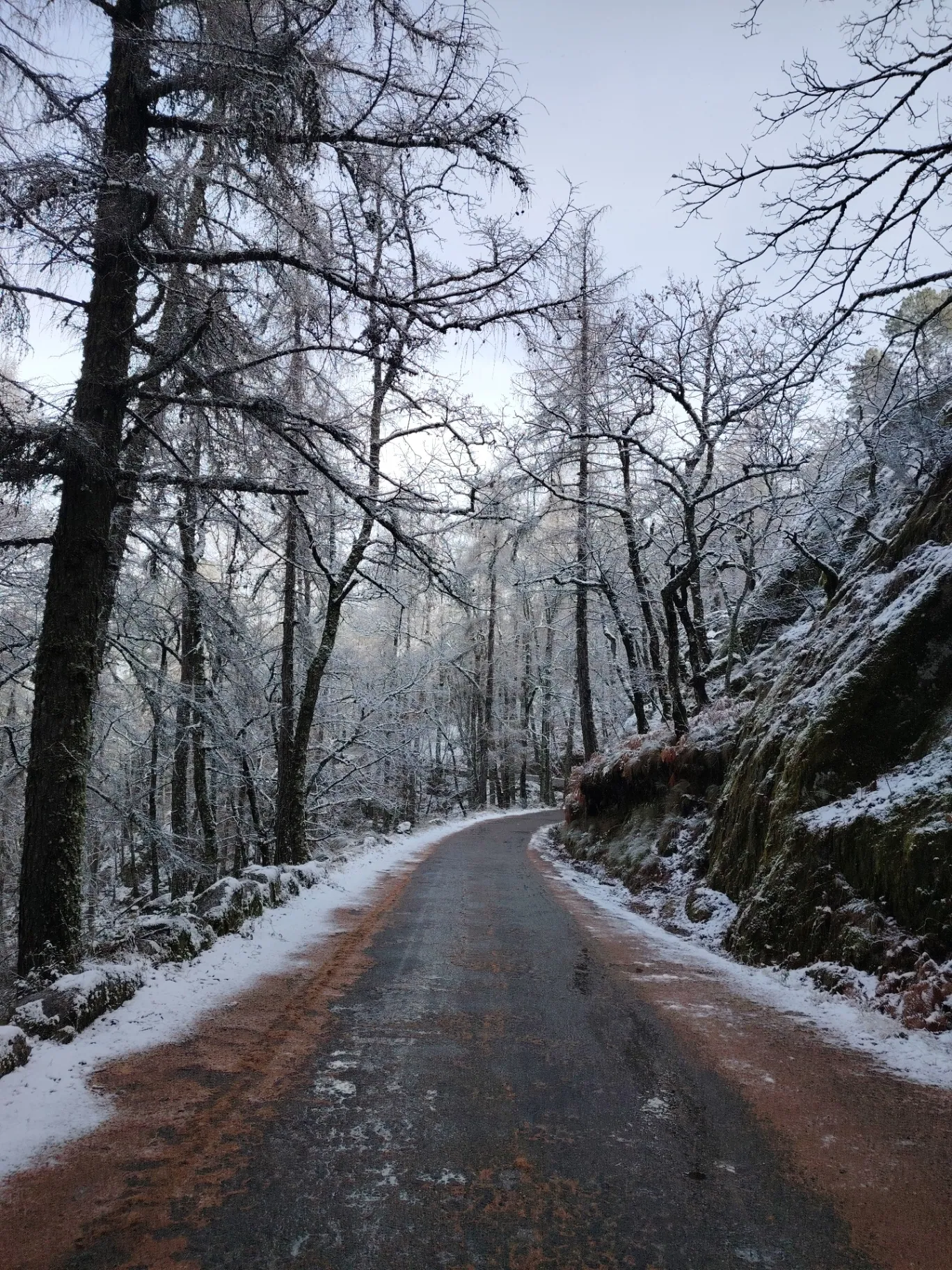
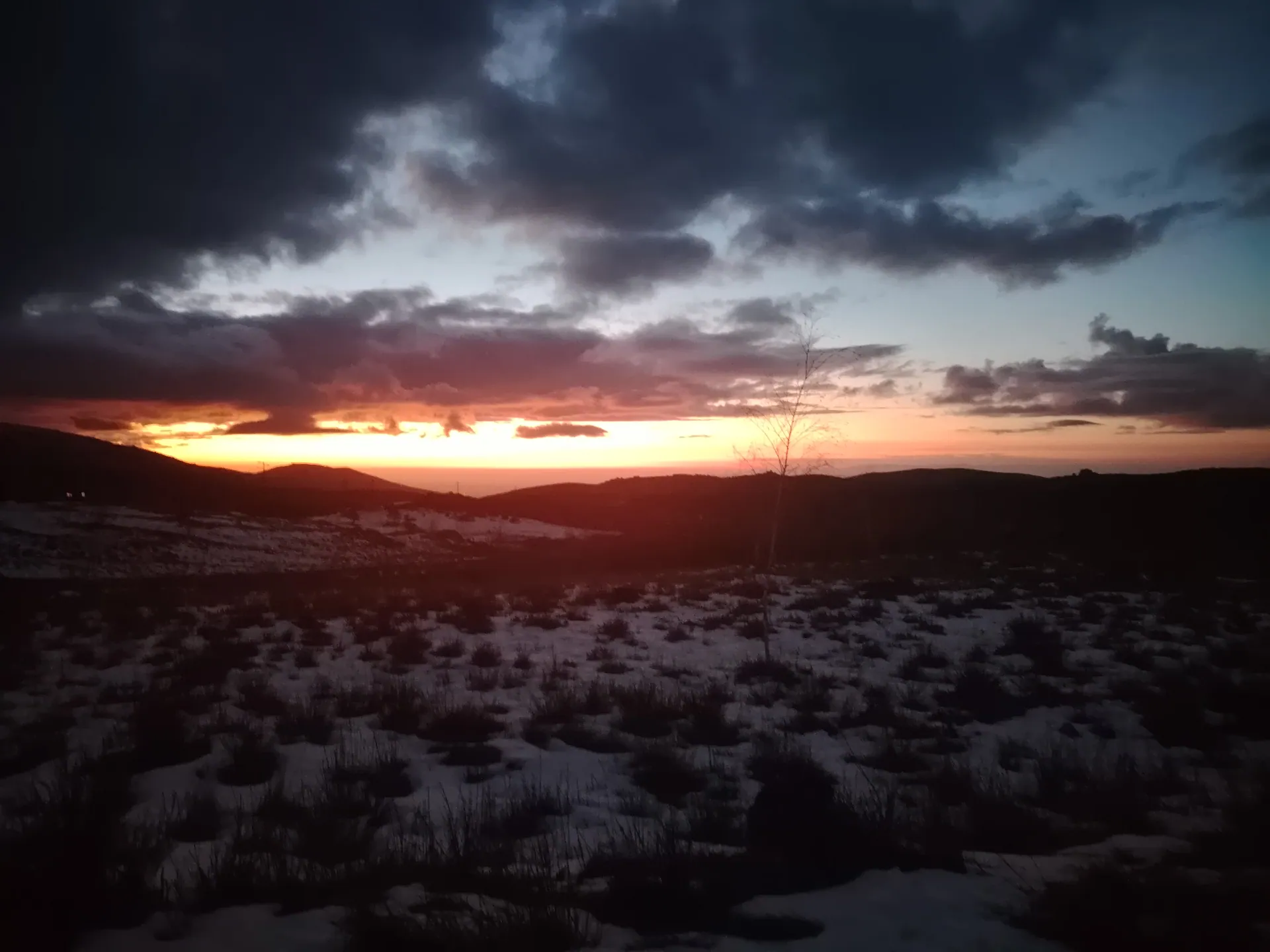
Our winter 4x4 tours run in a prepared vehicle with a guide who knows the state of the tracks that day. That changes two things: access, because you reach places the main road doesn't serve, and room to manoeuvre, because when one route isn't good there's another.
There's no prepayment and cancellation is free up to 48 hours before — which matters in winter, when a week-ahead forecast isn't worth much.
Verified reviews · 4.9★ across 91 reviews
We really enjoyed the tour, the information, and how helpful and kind they were with us — they even went out of their way to pick us up outside the usual area. We saw beautiful places and even snow for the first time; Sérgio is very warm and flexible, and brought along a sledge to play in the snow. It was great fun, different, and I recommend it enormously!
The tour was perfect! We got to see Serra da Estrela through places that are beautiful and well off the usual route. Sérgio really cares about giving guests a different experience, and he looks after everyone's wellbeing and safety. Our family highly recommends this activity!
We did a two-day trek. Incredible landscapes. A very committed and friendly guide. A beautiful, demanding route, especially Loriga up to the top of the range. Excellent value for money. I'd do it all again.